Prepare a work update: start with the purpose
Choose a preparation route for progress, a resource or decision request, or a period review. Use one service case to inspect openings, review checks and focused guides, and keep a preparation note.
On this page
“How is the project going? Give me a quick update.”
The difficult part is deciding what the listener needs to know. A list of completed tasks can hide the overall result. Cutting every detail can remove the evidence needed to make a decision. A brief update should help the listener make the required judgment: where things stand, what could affect the result, and what you need from them. Trim the activity log, while retaining evidence, risks, and conditions that change that judgment.
Use this as a preparation entry point: clarify the main task, then select the material it needs. Follow the focused guides for oral rehearsal, email revision, resource requests or period reviews.
Clarify the purpose before choosing the detail
“Give me a quick update” may mean share progress or make a resource request. When there is time, confirm: “I can start with the result and main risk. Do you need a progress update, or should we agree the next arrangement?” For an unexpected question, state the current position first and expand in response to questions.
Prepare four things: purpose, audience and existing context, available time and medium, and the response needed. Someone new to the project needs a sentence of background. A resource owner needs the effort and deadline. A person taking over the work needs ownership and handoffs. Choose for the actual task rather than assuming a person's title tells you everything they need.
Use the reporting preparation topic to clarify the conversation. Check the facts and data separately.
Use this quick checklist: audience / purpose / main judgment / supporting facts / conditions or unknowns / request and response deadline / next update. Confirm actual expectations rather than guessing the listener’s motives; making a request does not grant approval.
Fictional example: a team is improving its customer service process. All people, schedules, business figures, and targets in this article and its diagrams are invented to illustrate reporting methods.
The figures compare the same team's closed tickets in July and August, with 1,200 tickets in each period. First-response compliance means responding within 30 minutes; handling time measures manual effort per ticket; complaints are reported per 1,000 tickets. Work mix and staffing still need comparability checks. The fictional before-and-after change does not establish a particular measure's causal effect. Keep these conditions with the result.
Turn “we are making progress” into four parts
“We held several meetings, delivered the checklist and kept things moving.” This describes activity, but leaves the listener asking: where are we against the agreement, have we met the goal, and what happens next?
Try: “I’ll compare progress with this period’s agreement, then explain the gap, the evidence still needed and the proposed next step.” A progress update starts with delivery and connects it to identifying, examining and addressing issues, making the next arrangement easier to discuss.
| Four steps | What to explain |
|---|---|
| State progress | Compare actual delivery with the period, plan or target; separate task completion from business outcomes |
| Identify the issue | State observed gaps and impacts; if none were found, explain the review scope |
| Examine the cause | Separate facts, causal hypotheses and open questions, with a way to check them |
| Propose the response | Specify actions, ownership, timing and review criteria; retain the distinction between a request and approval |
The diagram uses this article's service pilot: first-response compliance is 93%, still 2 percentage points below the 95% target. The cause is unconfirmed, so the proposal starts with investigation and validation rather than claiming an improvement. Read all four parts, switch to the example, or copy the prompt. The optional original practice retains your saved progress outline.
The situation
Fictional scenarioActivity alone does not establish progress. Connect delivery, gaps, possible causes and action so the listener knows the current state and where coordination is needed.
Four parts of a progress update
Compare delivery with the agreement before explaining gaps. Causes need evidence; actions need dependencies and confirmation status.
Four parts of a progress update
- 01
State progress
Start with this period's deliverables, comparison baseline and checkpoint. Completing tasks and meeting a business target are different claims.
- 02
Identify the issue
Start with an observed gap and its relevance to the goal. If no issue has been found, state the review scope and what you will monitor; do not invent one.
- 03
Examine the cause
Separate facts, causal hypotheses and checks. A before-and-after change alone does not establish causation; specify how to test the explanation.
- 04
Propose the response
Make the proposal discussable: actions, ownership and review criteria. If a solution is not ready, report what you have tried and the next check. A proposal is not approval.
Apply it to your own work
Copy the prompt and add your material to prepare a draft you can adapt.
View prompt
Continue with your saved material
Open the original practice to continue with material saved in this browser.
When the purpose goes beyond sharing progress
For a resource request, decision or period review, use the preparation routes below to select an opening and review checks. The four-step progress outline and this preparation note are saved separately; use the one that fits the current task.
Prepare for this update's purpose
Choose the main task to see an opening, checklist and next reading for the same service case. If purposes are mixed or unclear, first clarify the main response needed; explore each route separately.
Share progress
Wording for the same fictional case
Pilot first-response compliance is 93%, two percentage points below the 95% target. Rollout still depends on integration acceptance and a small pilot. This is a status update with no decision requested; the next update is Friday.
Review the complete record
Work-update preparation note

Task selected by you: Share progress

Complete personal material and preparation notes


Your review (not verification or approval)

[ ] Retain period, definitions, target and evidence locations.

[ ] State material risks, conditions and the next update.

[ ] Confirm whether this is for awareness or includes a specific request.

Raw review value:

The following is fictional wording for the current task, not personal facts or a completed update.

Pilot first-response compliance is 93%, two percentage points below the 95% target. Rollout still depends on integration acceptance and a small pilot. This is a status update with no decision requested; the next update is Friday.

Speaking aloud: rehearse the script: https://bizthinkframe.com/articles/concise-work-update#rehearsal

A known deviation: explain risk and request: https://bizthinkframe.com/articles/project-delay-update

Writing an email: organize the opening and evidence: https://bizthinkframe.com/articles/bluf-work-email
Personal material is saved separately by language in this browser. It is not uploaded or translated. Clearing site data deletes it; keep a downloaded copy and avoid editing it in multiple tabs. Review checks reset after changes.
1. Form a judgment before listing activities
An update often loses focus because the writer has not yet decided what the evidence means. Is the project on track, behind its target, or ready for a change? A chronological account of meetings and revisions leaves that judgment to the reader.
Match the information to the audience's task. A project lead may need to decide whether a target is met, a delivery date is at risk, or extra resources are justified. “We coordinated with three departments” says little about those decisions. “First-response compliance improved by 7 percentage points, but remains 2 points below the 95% target” gives the discussion a clear starting point.
Maintain working notes whenever progress changes: current position, key evidence, risk, next action, open questions, and next update. Select from those notes when asked unexpectedly. If you cannot recall a number, say it needs checking rather than filling it in from memory.
Separate observations from explanations
Organize each issue as an observed fact, its impact, a possible cause, and an action. Mark an explanation as a hypothesis until evidence supports it. If the answer is still unclear, state what you have checked, what remains unknown, and when you expect to update the judgment.
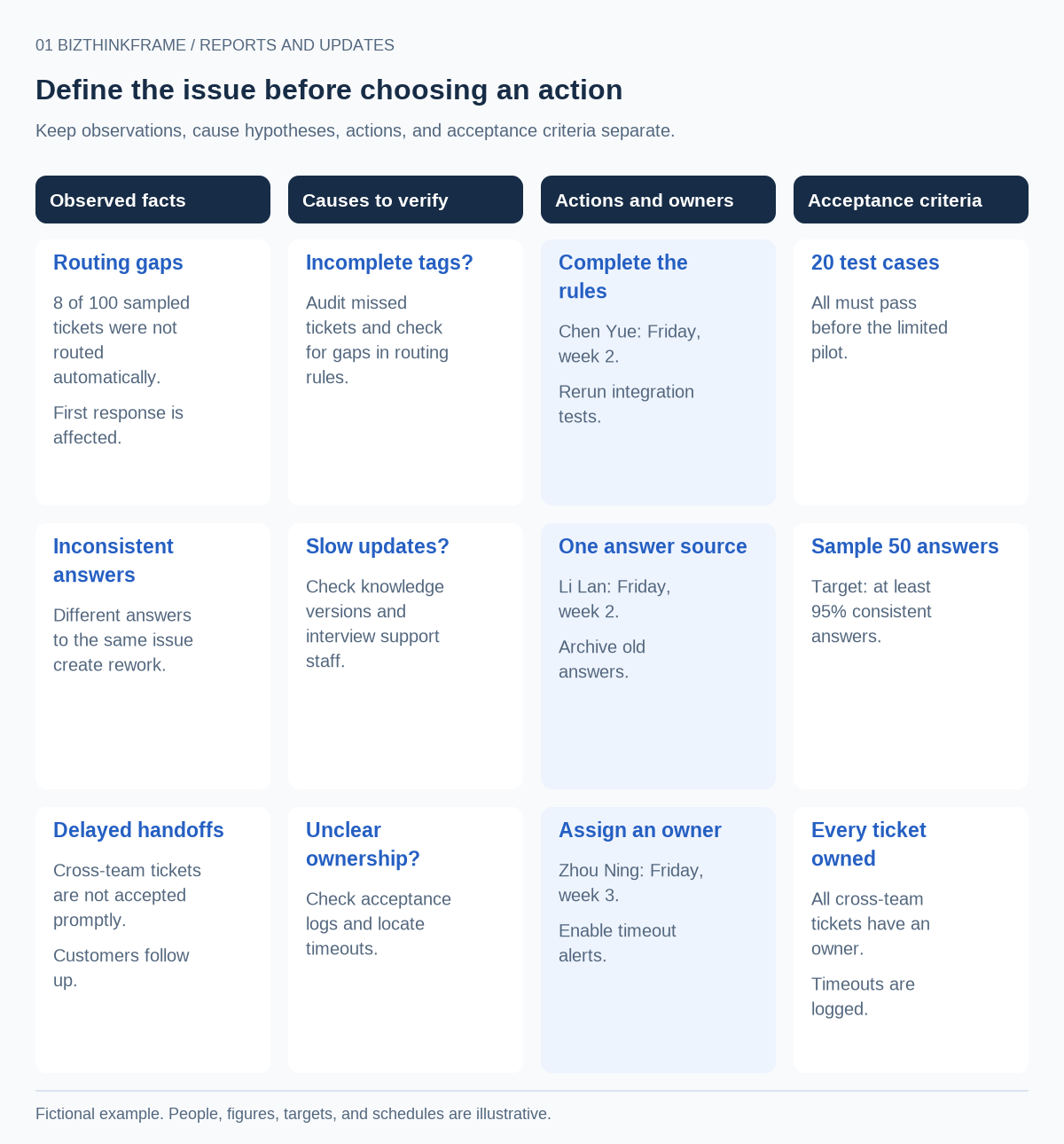
Figure 1. Turn broad complaints into issues that can be investigated, assigned, and checked. The cause explanations remain hypotheses.
For a larger project, also show how the work fits together. A simple map can connect the overall goal to the workstreams and shared resources, so the reader can place a detailed issue in context.
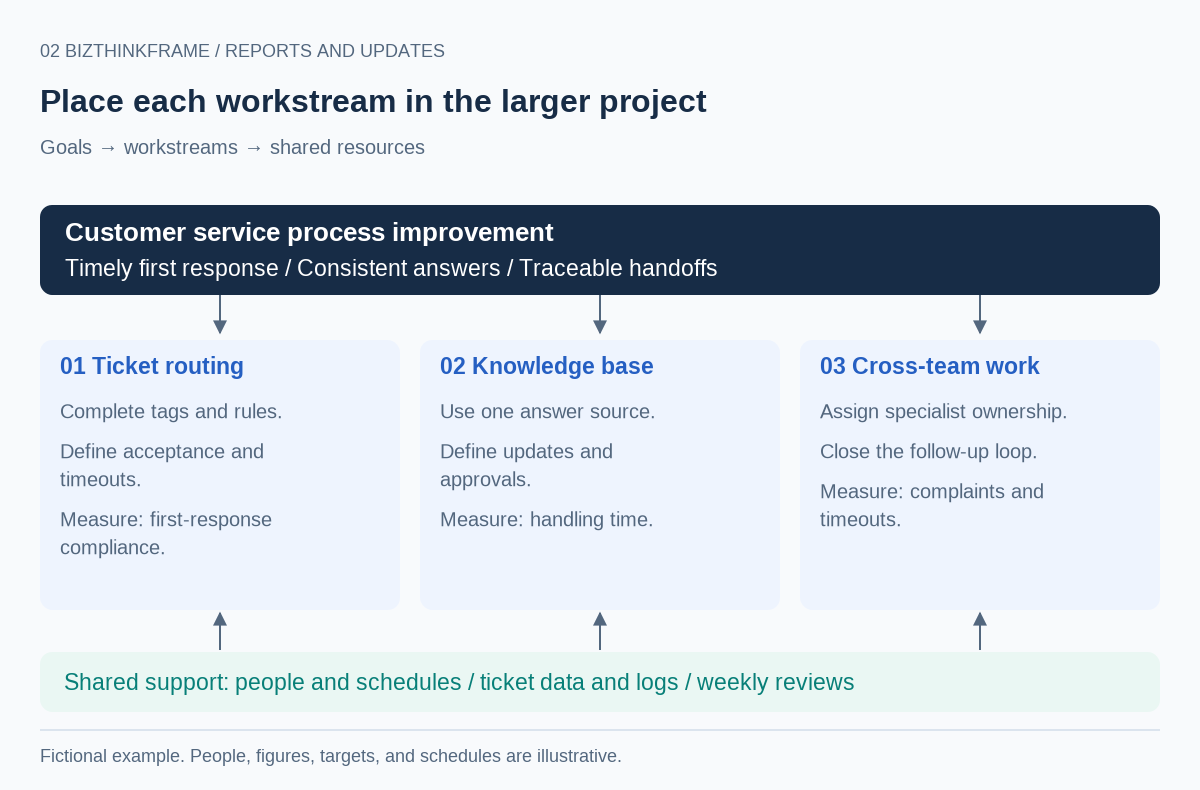
Figure 2. Show the whole project before expanding a particular workstream.
2. Lead with the result, then the risk and the request
Choose an opening for the purpose. To share results: “First-response compliance is 93%, two percentage points below the 95% target.” To request support: “Please confirm two person-days of testing support by the end of Tuesday; rollout depends on the tests and pilot.” To review: “Two of three targets are met; next we will investigate cross-team response.” These are wording exercises using the fictional case below.
Prepare four pieces of information: the result so far, the material risk, your proposed response, and the next action. Distinguish an update for awareness from a request for coordination or a decision.
A short spoken update in this example could be:
In this example's comparison of two periods with 1,200 closed tickets each, first-response compliance rose from 86% to 93%, below the 95% target; the cause of the change still needs checking. The next risk is integration testing: without another two person-days of support, the full rollout would move from week 4 to week 5. Please confirm that support by the end of Tuesday. In the meantime, we can keep manual routing. Week 4 remains conditional on passing all integration tests and the week 3 pilot meeting the target. I will update the test results and schedule on Friday.
Use three layers and expand when needed
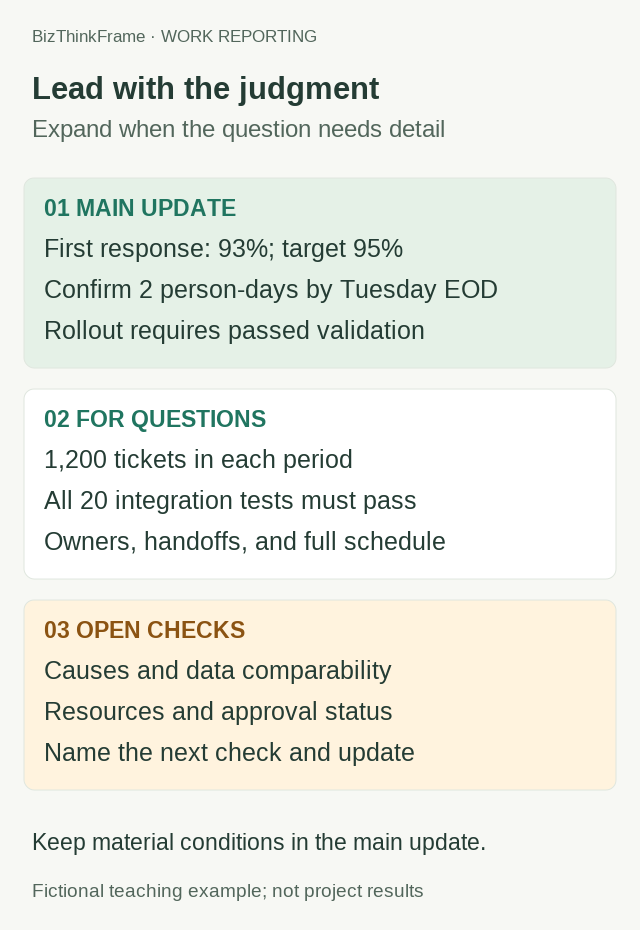
Figure 9. The main update, supporting detail, and open checks come from the same working notes. You do not need to read every layer in order.
| Layer | Material in this example | How to use it |
|---|---|---|
| Main update | 93% result and 95% target; testing risk; two-person-day request, response deadline, and rollout conditions | Lead with what changes the required judgment |
| For questions | 1,200 tickets in each period, metric definitions, 20 test cases, ownership and handoffs | Expand for the relevant question |
| Open checks | Causes of improvement, resource availability, and approval | State what is unknown and when it will be checked |
Do not hide a material risk in an attachment. Keep limitations that change the conclusion in the main update. If asked why results improved, explain that work mix and staffing still need comparability checks; the change cannot all be attributed to routing rules. If asked whether week 4 is certain, explain that all 20 integration tests and the week 3 pilot must pass. The rollout is a conditional plan.
With very little time, state the key judgment and request. Add reasons and detail when time allows. Use the manual one-minute rehearsal to say your script aloud, measure the time, and note edits. It retains the script for each completed attempt and its timing; it records no audio and does not rate persuasion.
Adapt the same material to the medium
| Medium | Show first | Keep as support |
|---|---|---|
| Spoken update | Current judgment, main risk, and response needed | Evidence available for questions |
| Message | Project and checkpoint, short summary, specific request and deadline | Checkable record locations; record important decisions as agreed |
| Subject naming the issue; conclusion or request first; evidence, conditions, and next update | Complete tables, tests, and plans | |
| One-page brief | Conclusion, key evidence, tradeoffs, and decision needed | Full report and detailed records |
An update for awareness does not need an invented approval request. A real decision request needs more than “for your information.” Sending a message does not establish that support or a proposal is approved; check the actual reply.
Before choosing the medium, check the purpose, urgency, communication agreement, evidence location, response deadline and confirmation record. Email may not be read promptly, and messages can also be retained; follow the actual agreement.
Use the reporting format topic. For a request at the start of an email, see the BLUF email example. To group several supporting reasons, see the Minto Pyramid work example. They serve different tasks; you do not need both for every update.
The longer report can hold the detailed evidence and plan. Choose a diagram for the question it answers: a roadmap for timing, a swimlane for handoffs, or a results table for the target gap. A short summary does not require compressing every detail into one picture.
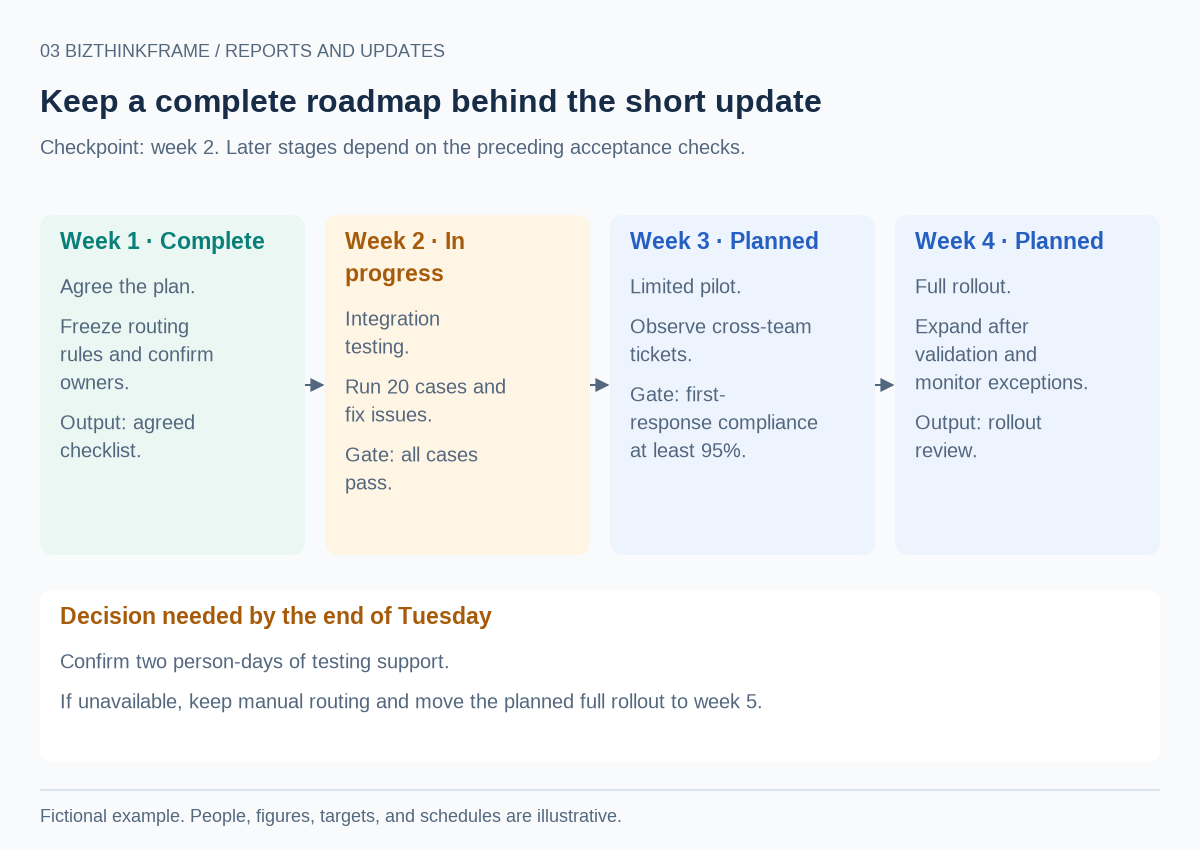
Figure 3. The next stages depend on acceptance checks; the dates are a plan, not a guarantee.
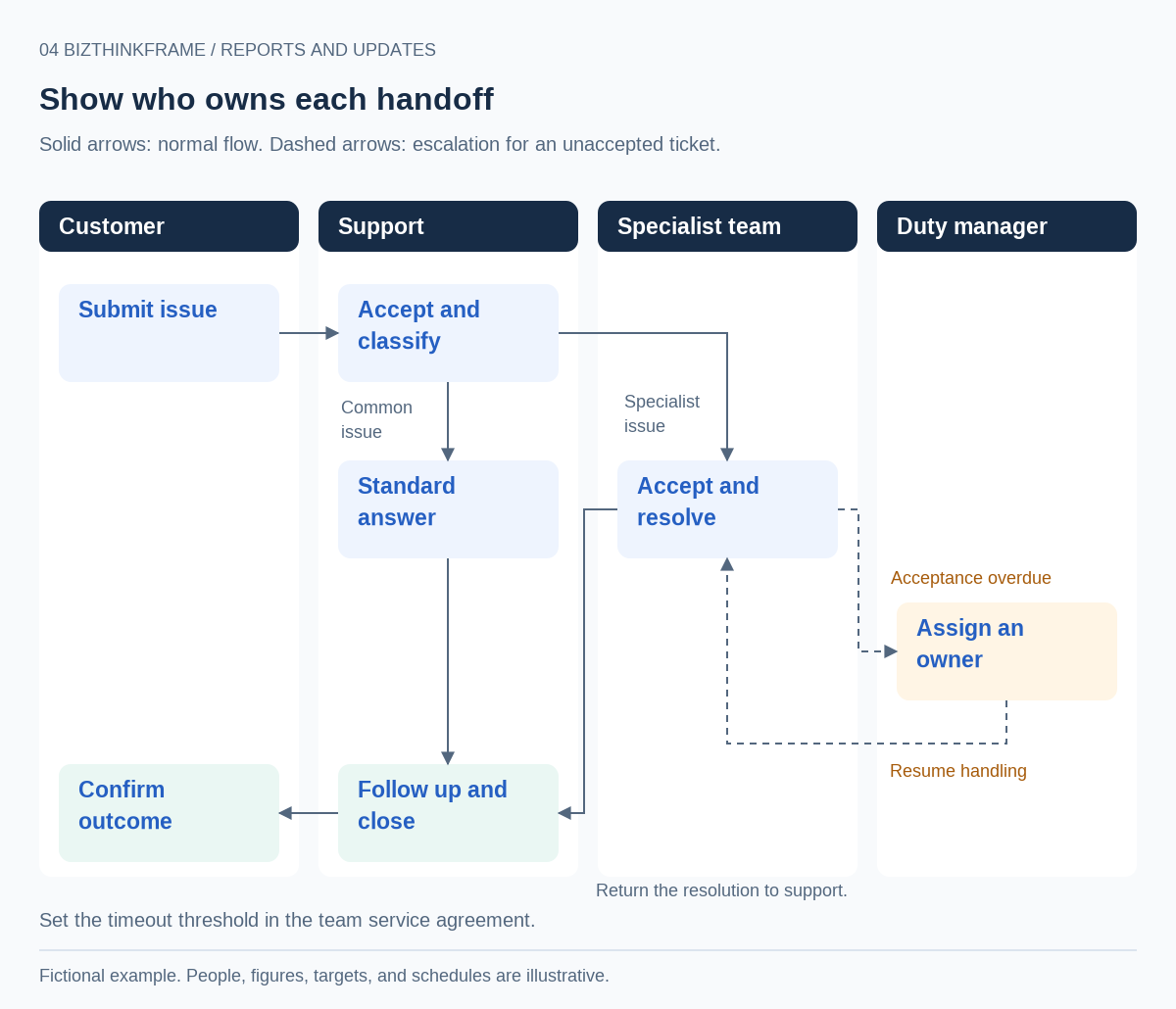
Figure 4. Use a swimlane to show ownership, handoffs, and the exception path. Agree the timeout threshold with the team.
For a short recommendation, use the PREP communication guide to connect your point, reason, example, and closing request. Preserve the distinction between a request for approval and an approved plan.
3. Explain what changed, with a baseline and a target
Keep three levels separate: what was delivered, what changed after delivery, and what the change may mean for the business. A completed knowledge base is a deliverable. Lower handling time is an observed change. A claim about profit would require additional evidence.
In this fictional comparison, the same team closed 1,200 tickets in July and 1,200 in August. The figures use the same definitions in both periods.
| Measure | July baseline | August pilot | Target | Reading |
|---|---|---|---|---|
| Average manual handling time | 18 minutes per ticket | 12 minutes | At most 12 minutes | Down 33.3%; target met |
| First response within 30 minutes | 86% | 93% | At least 95% | Up 7 percentage points; 2 points short |
| Complaints per 1,000 tickets | 18 | 12 | At most 12 | Down 6 per 1,000; target met |
Handling time means human handling time per ticket. Complaint figures are rates per 1,000 tickets. The targets are assumptions for this example. Two of the three targets are met; “all targets achieved” would misrepresent the result.
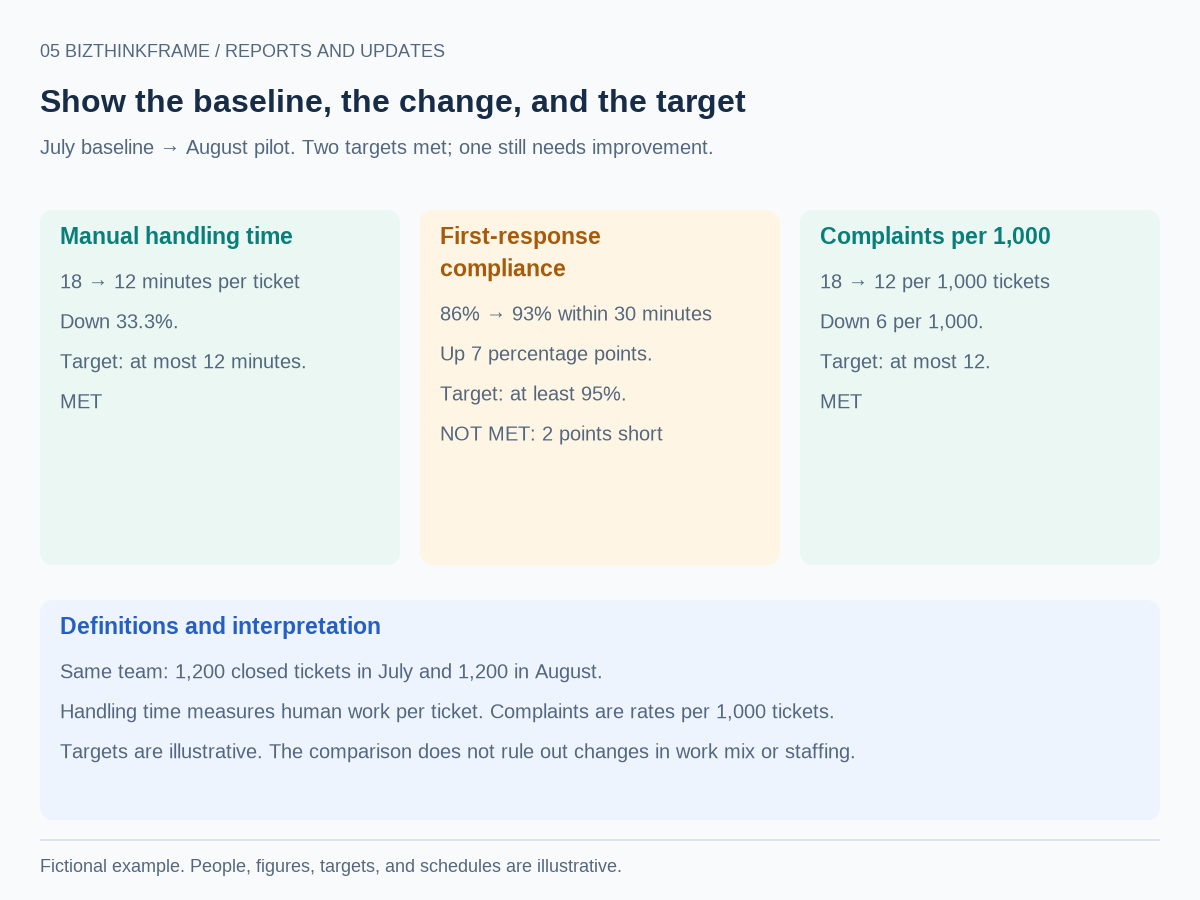
Figure 5. Baselines, targets, denominators, and definitions make the result checkable.
The comparison shows change, but does not isolate the process change as its cause. Work mix, staffing, and other factors may also have changed. Do not turn a before-and-after result into a causal claim without supporting evidence.
Separate team results from individual contributions. After describing the team's work, identify the deliverable or check you owned and its supporting record. Do not count the same team result once for every person. Use the evidence topic, then the individual contribution example when you need more detail.
When the output is qualitative, describe what is available, who can use it, and what has been checked. There is no need to invent a return-on-investment figure for a process document or a newly agreed handoff.
4. Make the next step executable
A plan needs an owner, a deadline, an acceptance criterion, and any dependencies. “Continue improving collaboration” leaves too much undefined. “Chen Yue will complete all 20 integration test cases by Friday of week 2; all must pass before the limited pilot” can be followed up.
The example requires two additional person-days of testing support, confirmed by the end of Tuesday. Zhou Ning then owns the week 3 pilot, with first-response compliance of at least 95% as its acceptance threshold. Li Lan owns the planned week 4 rollout, conditional on the pilot passing. If resources are unavailable, retain manual routing and move the planned rollout to week 5. If validation fails, investigate before expanding; a later date alone does not remove that dependency.
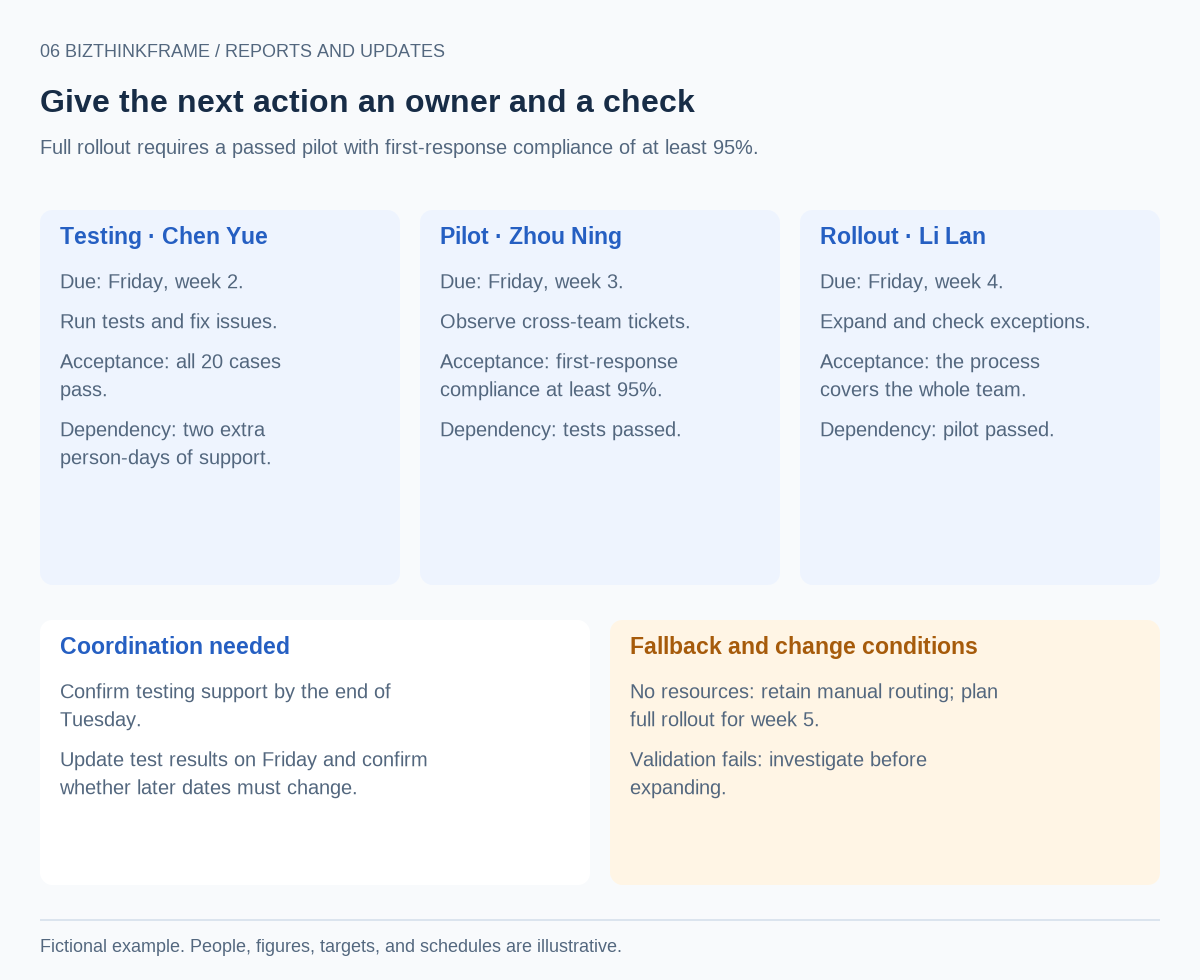
Figure 6. Include the request for support and the condition that would change the plan.
Use the goals and actions topic to check ownership, deadlines, acceptance, and dependencies. Separate an action check from outcome observation: passing 20 test cases does not establish that full rollout has achieved 95%. Two extra person-days are requested effort; record actual effort separately. Compare each update with the previous commitment and explain changes.
For annual planning, translate the direction into quarterly priorities and checks. Agree each metric's denominator, period, and sampling approach when the plan is approved. Record actual results separately from targets.
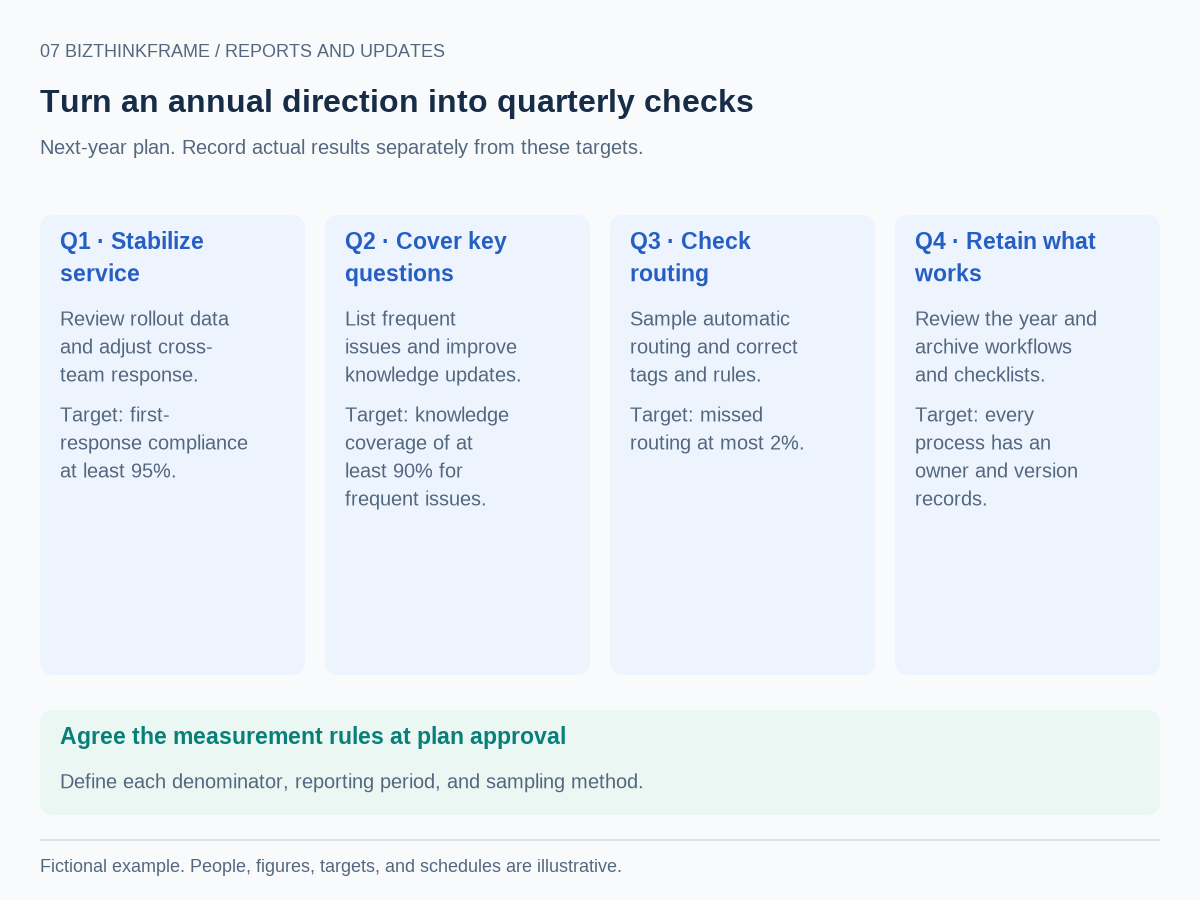
Figure 7. Quarterly checkpoints make an annual direction easier to review. These are future targets, not completed results.
Prepare evidence for an improvement request
For requested effort, continue to the resource request with alternatives, separating existing effort, the request and the total. If the process record is incomplete, use the business process inventory first; use ECRS for conditional options and a business improvement proposal for trial scope and approval. These are independent cases, not new evidence about this service pilot.
Clarify the activity and reserve time
Use 6W2H when participants, purpose or constraints are unclear. Use the Urgency–importance matrix when activities compete for time. Choose for the current question and keep authority and capacity open where unconfirmed. Time allocated is not work completed.
5. Review results and improve the next cycle
A period review should connect the original goal, the observed result, the main differences, and the next adjustment. In this example, two targets are met and first-response compliance still needs improvement. The next step is to verify cross-team handling before expanding the rollout.
Keep the schedule separate from the result. A Gantt bar shows when a task is scheduled. Its length does not demonstrate how much is complete or whether the work met its acceptance criteria.
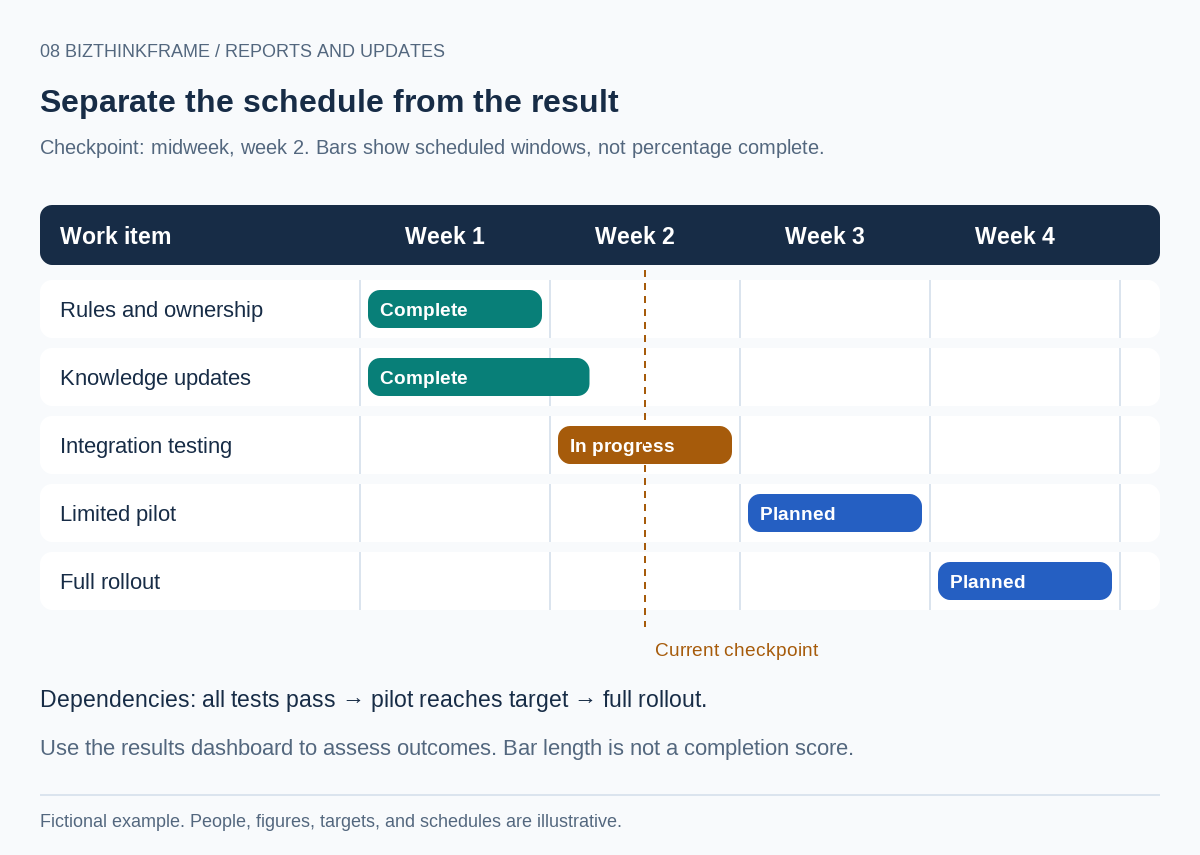
Figure 8. The checkpoint is midway through week 2. Pilot and rollout remain conditional on the preceding checks.
Make the lesson specific enough to change a future action. “Coordination should improve” is difficult to use. “Testing support was not secured early enough; at the next plan signoff, confirm the owner and the available testing window” identifies a practical change.
Use the KPT retrospective guide to separate practices to keep, observed problems, and one change to try next. Give that experiment an owner and a review point, or mark those details as unconfirmed.
Choose a reflection or team discussion for the question
For a personal experience, YWT connects what you did, learned and will do next; KPT addresses practices, problems and experiments. PM leadership theory addresses goal support and group maintenance; the Need–Want matrix addresses necessary work and willingness. Check interpretations with the people involved; delivery figures do not establish how members feel.
Follow up with feedback, support, or coaching
Use the Johari window to compare understandings through voluntary feedback, respecting privacy. Use Herzberg’s two-factor theory to discuss obstacles and growth opportunities. For the general method, read GROW. For a development conversation, continue to the GROW practice guide, separating suggestions, personal choices, support requests and actual confirmation. These optional routes neither infer motivation or commitment nor add evidence about this service pilot.
Leave a next action that can be checked
In this case, KPT could retain the shared knowledge entry point as a practice to keep; identify the two-percentage-point response gap and unconfirmed testing support as problems; and propose checking cross-team response before testing the next arrangement. Keeping a practice does not prove it caused all the improvement. A Try item is not a completed result.
To turn the review into a next-period update, read from retrospective to next plan. Use your own records to name the owner, observation window, measurement rules, and next check.
Check the update before sending it
- Does the opening state the overall position?
- Are the period, definitions, baseline, and supporting evidence clear?
- Does each material risk include its impact, response, and remaining unknowns?
- Does the next action have an owner, deadline, and acceptance criterion?
- Is it clear whether the reader is being informed, asked to coordinate, or asked to decide?
Use the editable outline below to prepare your own update: overall position; key result and evidence; risk and impact; proposed response and reason; next action, owner, deadline, and acceptance; and the specific request. Keep only what helps the reader make the required judgment, with supporting detail available when needed.
Download the blank working outline, or enter your own material in the work-update tool for a progress update, decision request or period review. Check the judgments, facts and approval status before copying or exporting.
Connect a task to five levels of purpose
You can work outward from the goal or back from a deliverable to its purpose. Both routes should meet at an inspectable action. If the goal is unclear, ask what change is expected. Do not present your interpretation as an agreed management objective.
The five-ring model connects purpose, capability, resources, conversion and application. Use it as a set of questions, not a rule for inferring what someone thinks from their job title. Explore how a task connects to a shared goal.
| Check | What to retain |
|---|---|
| Purpose | Name the intended change and why it matters. |
| Capability | Separate existing capability from skills that need developing. |
| Resources | Identify information, time, access and whether providers have agreed. |
| Conversion | How could existing capabilities and resources be combined or substituted? |
| Application | Specify the immediate work and a review point. |
Read the dialogue, then use the one-page diagram to check the method. The Example tab uses a separate fictional scenario. Copy the prompt to organize your material, or open the original practice to continue a saved draft. Keep unknowns, evidence gaps and unapproved arrangements explicit.
The situation
Fictional scenarioThe five-ring model connects purpose, capability, resources, conversion and application. Use it as a set of questions, not a rule for inferring what someone thinks from their job title. Explore how a task connects to a shared goal.
Connect a task to five levels of purpose
Follow the connections from purpose to application. These are perspectives on the same work, not ranks in a hierarchy.
Connect a task to five levels of purpose
- 01
Purpose
Name the intended change and why it matters.
- 02
Capability
Separate existing capability from skills that need developing.
- 03
Resources
Identify information, time, access and whether providers have agreed.
- 04
Conversion
How could existing capabilities and resources be combined or substituted?
- 05
Application
Specify the immediate work and a review point.
Apply it to your own work
Copy the prompt and add your material to prepare a draft you can adapt.
View prompt
Continue with your saved material
Open the original practice to continue with material saved in this browser.
One issue, different management responsibilities
Ask what needs deciding today, then select the material. When delivery and development both matter, explain the immediate constraint before discussing continuity. A changed question may reflect the meeting’s purpose, context or responsibilities. It does not by itself show that someone undervalues your work.
The role model separates business from people and near-term from longer-term responsibilities. Several may apply at once. These are responsibilities in a situation, not four personality types.
| Check | What to retain |
|---|---|
| Execution · near-term business | Explain delivery, deviations and immediate obstacles. |
| Strategy · longer-term business | Explain direction, opportunities and assumptions to test. |
| Team coordination · near term | Explain responsibilities, handoffs and support to coordinate. |
| Organizational capability · longer term | Explain reusable practices, development and succession. |
Read the dialogue, then use the one-page diagram to check the method. The Example tab uses a separate fictional scenario. Copy the prompt to organize your material, or open the original practice to continue a saved draft. Keep unknowns, evidence gaps and unapproved arrangements explicit.
The situation
Fictional scenarioThe role model separates business from people and near-term from longer-term responsibilities. Several may apply at once. These are responsibilities in a situation, not four personality types.
One issue, different management responsibilities
Locate the material in the relevant area. More than one area may apply; the grid does not score people or work.
One issue, different management responsibilities
- 01
Execution · near-term business
Explain delivery, deviations and immediate obstacles.
- 02
Strategy · longer-term business
Explain direction, opportunities and assumptions to test.
- 03
Team coordination · near term
Explain responsibilities, handoffs and support to coordinate.
- 04
Organizational capability · longer term
Explain reusable practices, development and succession.
Apply it to your own work
Copy the prompt and add your material to prepare a draft you can adapt.
View prompt
Continue with your saved material
Open the original practice to continue with material saved in this browser.
Choose an update trigger before a time slot
Choose timing in light of reversibility, impact and existing agreements. Do not delay material risk while waiting for a better mood, or assume that difficulty arranging a meeting is one person’s fault. Agree what is needed at initiation, during work and at completion; material changes can trigger an additional update.
The right time to update depends on the trigger. Initiation, early checks, midpoint reviews and closure can have agreed checkpoints. Percentage milestones are reminders, not universal timing rules.
| Check | What to retain |
|---|---|
| Trigger | What changed, and who needs to know? |
| Channel and timing | Use the agreed escalation route for urgency; schedule routine updates. |
| What to say now | Keep the impact, request and next update time. |
Read the dialogue, then use the one-page diagram to check the method. The Example tab uses a separate fictional scenario. Copy the prompt to organize your material, or open the original practice to continue a saved draft. Keep unknowns, evidence gaps and unapproved arrangements explicit.
The situation
Fictional scenarioThe right time to update depends on the trigger. Initiation, early checks, midpoint reviews and closure can have agreed checkpoints. Percentage milestones are reminders, not universal timing rules.
Choose an update trigger before a time slot
Check these considerations together, keeping facts, conditions and the response needed distinct.
Choose an update trigger before a time slot
- 01
Trigger
What changed, and who needs to know?
- 02
Channel and timing
Use the agreed escalation route for urgency; schedule routine updates.
- 03
What to say now
Keep the impact, request and next update time.
When the situation changes
- Routine work is starting
- Agree goals, scope, acceptance and update cadence before avoidable rework accumulates.
- A change may affect delivery
- Flag known facts and uncertain impact promptly. A complete cause analysis or solution is not a prerequisite for notification.
- An agreed checkpoint arrives
- Compare actual progress with the agreement, then discuss support and the next checkpoint.
Apply it to your own work
Copy the prompt and add your material to prepare a draft you can adapt.
View prompt
Continue with your saved material
Open the original practice to continue with material saved in this browser.
Was it said, or did you infer it?
Listening involves preparation, recording, mutual understanding and feedback. Allow the person to explain, then paraphrase the key points. Use written confirmation for complex requests. Avoid mechanically repeating every sentence or treating a change in tone as proof of intent. An unconfirmed interpretation remains a question, not an instruction.
Find the information, then restate your understanding for confirmation. Tone and expression may prompt a question but do not establish motive. Separate what was said, your interpretation and the next check.
| Check | What to retain |
|---|---|
| What was explicitly said | Record the words, subject and context. |
| An interpretation to check | Ask through a neutral paraphrase; keep inference separate from fact. |
| Next response | Record the task, format and timing after confirmation. |
Read the dialogue, then use the one-page diagram to check the method. The Example tab uses a separate fictional scenario. Copy the prompt to organize your material, or open the original practice to continue a saved draft. Keep unknowns, evidence gaps and unapproved arrangements explicit.
The situation
Fictional scenarioFind the information, then restate your understanding for confirmation. Tone and expression may prompt a question but do not establish motive. Separate what was said, your interpretation and the next check.
Was it said, or did you infer it?
Compare the categories and the evidence each needs. Classification does not turn a hypothesis or proposal into a fact.
Was it said, or did you infer it?
- 01
What was explicitly said
Record the words, subject and context.
- 02
An interpretation to check
Ask through a neutral paraphrase; keep inference separate from fact.
- 03
Next response
Record the task, format and timing after confirmation.
Apply it to your own work
Copy the prompt and add your material to prepare a draft you can adapt.
View prompt
Continue with your saved material
Open the original practice to continue with material saved in this browser.
Make a phone update a two-way exchange
A call need not solve the whole problem. It should give the person who must respond the material change. For routine matters, arrange a suitable time and send a brief note. Urgent impact should not go unreported because a meeting is unavailable. Read back arrangements before ending and confirm them in writing without filling gaps yourself.
A call may lack shared visual material. Check availability, lead with the point, listen and adjust pace and pauses. Use the agreed escalation route for urgent issues.
| Check | What to retain |
|---|---|
| Opening and setting | Check availability and whether the setting is suitable. |
| Change and request | Focus on what this call needs to address. |
| Pause and read-back | Hear the response and confirm the task, rather than acting on isolated words. |
| Written follow-up | Record what was actually agreed and what remains open. |
Read the dialogue, then use the one-page diagram to check the method. The Example tab uses a separate fictional scenario. Copy the prompt to organize your material, or open the original practice to continue a saved draft. Keep unknowns, evidence gaps and unapproved arrangements explicit.
The situation
Fictional scenarioA call may lack shared visual material. Check availability, lead with the point, listen and adjust pace and pauses. Use the agreed escalation route for urgent issues.
Make a phone update a two-way exchange
Check these considerations together, keeping facts, conditions and the response needed distinct.
Make a phone update a two-way exchange
- 01
Opening and setting
Check availability and whether the setting is suitable.
- 02
Change and request
Focus on what this call needs to address.
- 03
Pause and read-back
Hear the response and confirm the task, rather than acting on isolated words.
- 04
Written follow-up
Record what was actually agreed and what remains open.
When the situation changes
- The person can talk
- State the change and request, then pause for a response. A call is a conversation.
- The person is unavailable
- Schedule routine discussion and send a brief note. For urgency, use the agreed escalation route and explain why it is time-sensitive.
- A key arrangement was unclear
- Read it back and check. Do not guess names, dates or approval.
Apply it to your own work
Copy the prompt and add your material to prepare a draft you can adapt.
View prompt
Continue with your saved material
Open the original practice to continue with material saved in this browser.
Turn a busy day into work you can prioritize
A daily update can record actions, inspectable outputs, actual time spent and tomorrow’s plan. Time spent is not value created, and task completion does not establish a business outcome. Schedule important work before it becomes urgent. When ad hoc requests displace it, explain the conflict and alternatives rather than hiding unfinished work.
Use the four areas to inspect time allocation. Importance relates to goals; urgency relates to deadlines and consequences of delay. The classification does not override role commitments or required duties.
| Check | What to retain |
|---|---|
| Important and urgent | Explain the deadline, output and conflicts to resolve. |
| Important, less urgent | Reserve time so longer-term improvements are not repeatedly displaced. |
| Urgent, importance needs checking | Check the purpose, delegation options and authority. |
| Less urgent, weaker goal connection | Consider reducing, combining or stopping it while retaining necessary maintenance. |
Read the dialogue, then use the one-page diagram to check the method. The Example tab uses a separate fictional scenario. Copy the prompt to organize your material, or open the original practice to continue a saved draft. Keep unknowns, evidence gaps and unapproved arrangements explicit.
The situation
Fictional scenarioUse the four areas to inspect time allocation. Importance relates to goals; urgency relates to deadlines and consequences of delay. The classification does not override role commitments or required duties.
Turn a busy day into work you can prioritize
Locate the material in the relevant area. More than one area may apply; the grid does not score people or work.
Turn a busy day into work you can prioritize
- 01
Important and urgent
Explain the deadline, output and conflicts to resolve.
- 02
Important, less urgent
Reserve time so longer-term improvements are not repeatedly displaced.
- 03
Urgent, importance needs checking
Check the purpose, delegation options and authority.
- 04
Less urgent, weaker goal connection
Consider reducing, combining or stopping it while retaining necessary maintenance.
Apply it to your own work
Copy the prompt and add your material to prepare a draft you can adapt.
View prompt
Continue with your saved material
Open the original practice to continue with material saved in this browser.
The Kano model: which needs should you confirm first?
Nothing in a job title tells you which needs apply. Use the four relationships to ask what is essential, what needs a better comparison, what extra might help, and what could distract. The curves are conceptual, not measured satisfaction scores or predictions of a particular manager’s response.
Independent fictional preparation example: verify definitions first, then compare the options the listener has requested. A traceable assumptions sheet might help with questions, but its usefulness is unconfirmed. If only a risk conclusion is needed now, decorative slides could distract. These are provisional classifications, not ratings given by the listener.
Before the next update, choose one extra item and state the judgment it supports. Check that with the listener before treating its category as a confirmed requirement.
The situation
Fictional scenarioMore effort does not establish that needs are met. Kano relationships help frame questions; they do not reveal preferences from a job title or guarantee satisfaction.
Clarify needs before adding more
Read fulfillment across and satisfaction vertically. Use the four conceptual curves and cards to frame questions to check.
The Kano model
Meet the essentials. Then decide what is worth adding.
Conceptual relationships · not measured values or forecasts
Across: fulfillment · Up: satisfaction
Confirm needs through observation and conversation. Categories may vary by person and context; the model cannot guarantee satisfaction.
Apply it to your own work
Copy the prompt and add your material to prepare a draft you can adapt.
View prompt
Communication networks: why do changes arrive late?
Map where the information actually travelled before judging anyone’s motives. A line represents a direct link; two people without one may need a relay. The diagram does not measure authority, relationship quality or communication effectiveness. All-channel access can reduce relays but increase coordination and interruptions; it does not justify sharing everything with everyone.
Independent fictional network example: six roles are labelled A to F. Each of two groups has strong internal links, while cross-group changes pass through C and D. If a relay is late, the other group may retain an old version. Check the original message, recipients and version before proposing direct clarification and receipt checks for relevant roles; do not infer deliberate concealment.
Review one recent change: who needed it, who confirmed receipt, and who updated the record? Preserve authority and confidentiality. Adjust one handoff and observe it before proposing a whole-team redesign.
The situation
Fictional scenarioDelivery depends on links, scope and feedback agreements. Comparing networks can reveal handoffs; a diagram does not diagnose relationships or justify sharing confidential information with everyone.
See direct links and relay paths
Compare the five network overviews, then select a pattern and member to distinguish direct contacts from relays.
Communication networks
See who can connect directly and who needs a relay.
Choose for the task, permissions and coordination costs. More all-channel links do not mean every message should go to everyone.
Apply it to your own work
Copy the prompt and add your material to prepare a draft you can adapt.
View prompt
Connect work value to evidence and trade-offs
Preparing a register and checking versions are actions. They do not by themselves establish savings or removal of risk. Use outcomes, efficiency, cost and risk as four equal perspectives for seeking evidence, not as job ranks or a requirement to monetize every contribution.
Separate fictional handoff example: 12 items are submitted, with 8 accepted, 2 returned and 2 awaiting review. Maintaining the register makes status inspectable, but comparable effort records are absent, so no efficiency gain or net saving is established. Outstanding items still need follow-up. The 8 acceptances are a team result; describe the records and evidence you personally contributed.
Write four sentences connecting action, evidence, the goal and trade-offs or unknowns. If a measure adds cost while reducing risk, retain the trade-off and approval status rather than dismissing it as valueless.
The situation
Fictional scenarioCompleting a task is a fact; its value needs a connection to the goal. Use four perspectives to seek evidence and retain effort, quality and trade-offs. An action alone does not establish a net benefit.
Connect work to value
Read four perspectives on the same work. Start with inspectable changes, then state impacts that remain unmeasured. This is a value check, not a performance score.
Connect work to value
- 01
Outcomes
Explain the contribution to the goal or service outcome; distinguish personal action from team results.
- 02
Efficiency
Compare output and effort with scope and quality held consistent; keep waiting time separate.
- 03
Cost
Separate recurring effort from one-time setup, including both additions and reductions.
- 04
Risk
Describe the risk, potential consequence and basis for mitigation; an action does not eliminate risk by itself.
Apply it to your own work
Copy the prompt and add your material to prepare a draft you can adapt.
View prompt
Confirm the need before adding material
More slides can amplify a mismatch. Start with the shared business goal, discuss the problem using a concrete record, then translate confirmed needs into a deliverable. Taking another perspective produces a hypothesis to check, not knowledge of another person’s thoughts.
Separate fictional handoff example: ask whether the decision concerns readiness for acceptance or file completeness. Use the 12-item register to check evidence gaps for the 2 returned items and 2 awaiting review. Recording versions, checks and reviewers is still a proposal; scope, responsibility and timing remain unagreed.
Prepare three columns: the known goal, questions to check and support you could provide after confirmation. Stay within authority and retain unanswered needs as open questions.
The situation
Fictional scenarioA mismatch may reflect different understandings of the task. Taking another perspective is a starting point; discussion and a business check turn a guess into a shared requirement.
Align on needs through confirmation
Follow three connected steps: consider the other perspective, discuss the problem together, and connect to the core business need. Separate known requirements from assumptions throughout.
Align on needs through confirmation
- 01
Consider their perspective
Use the shared goal to identify possible problems, marking assumptions explicitly.
- 02
Discuss together
Ask about a concrete record and discuss support within your responsibilities.
- 03
Connect to the business need
Translate confirmed needs into an inspectable deliverable, scope and feedback arrangement.
Apply it to your own work
Copy the prompt and add your material to prepare a draft you can adapt.
View prompt
Put evidence beside the key term
Earnings, success and failure, customers, market, opportunity, competitors, cost, loss and risk can prompt a check of relevant business relationships. They are not a universal attention formula, and a job title does not establish someone’s preferences. The diagram groups them for reading; choose terms from the confirmed task.
Separate fictional handoff example: if the decision concerns acceptance, report 12 submitted, 8 accepted, 2 returned and 2 awaiting review, then ask for confirmation of the remaining acceptance checks. Do not add a major market opportunity or a large loss: the register supplies no such evidence.
Connect the selected term to evidence, impact or conditions, and the response needed. Revenue is not profit, and cost already incurred is not a future risk. Where data are absent, ask a checking question rather than filling the gap with emphatic language.
The situation
Fictional scenarioA key term can orient attention, but cannot replace facts. Choose it from the confirmed task rather than guessing preferences from a job title or exaggerating benefits and risks.
Connect key terms to evidence
Nine terms are grouped into results, external conditions, and resources and exposure for easy reference. Choose those relevant to the task and connect them to evidence and the response needed.
Connect key terms to evidence
- 01
Results: earnings, success and failure
EarningsSuccess / failureDefine the result and success criteria; revenue, profit and task completion are different measures.
- 02
External: customers, market, opportunity, competitors
CustomersMarketOpportunityCompetitorsSelect external changes relevant to the decision, retaining observation scope and evidence.
- 03
Resources and exposure: cost, loss, risk
CostLossRiskDistinguish resources spent, losses already incurred and future risks, with their definitions.
Apply it to your own work
Copy the prompt and add your material to prepare a draft you can adapt.
View prompt
A monthly update through six monitoring lenses
A monthly report need not concatenate weekly activity logs. For completed work, explain results and quality. For unfinished work, explain the current process, variance and next action. Check scope, time, people, cost, output and risk for the same month, then connect next month’s goals, tasks, people, resources, timing and support needs. Unplanned work may matter, but should remain distinct from the original plan.
This separate fictional month-end example is not combined with the other examples in this article: 12 handoff packs were planned and submitted; eight were accepted, two returned and two await review. There were also two ad-hoc Q&A sessions. Do not add sessions to pack counts or treat submission as acceptance. Without item-level dates and effort records, do not claim all work was on time, cost-free or more efficient. Next month, check return reasons and pending-review arrangements; owners, dates and support remain to confirm.
| Check | Method and boundary |
|---|---|
| Scope | Separate planned work from additions, retaining their definitions. |
| Time | Report progress and variance against agreed checkpoints; submission time does not establish acceptance. |
| People | Describe participation, responsibilities and coordination points; distinguish team outcomes from individual contribution. |
| Cost | Record actual effort and additional needs, distinguishing cash, work time and missing records. |
| Output | Describe results using agreed quality and acceptance status, retaining unfinished work. |
| Risk | State unfinished items, possible impacts, next action and support requests, separating facts from forecasts. |
The diagram shows the complete method by default. Switch to Example to compare a fictional scenario. The prompt is copied to the clipboard; your material is not sent automatically.
The situation
Fictional scenarioA monthly update reviews completed results and monitors ongoing work. Distinguish planned from unplanned work, and submissions from accepted completion.
A monthly update through six monitoring lenses
Use six equal lenses for the same month and task scope. Connect current results to next month’s plan and support requests; mark missing records explicitly.
A monthly update through six monitoring lenses
Scope
Separate planned work from additions, retaining their definitions.
Time
Report progress and variance against agreed checkpoints; submission time does not establish acceptance.
People
Describe participation, responsibilities and coordination points; distinguish team outcomes from individual contribution.
Cost
Record actual effort and additional needs, distinguishing cash, work time and missing records.
Output
Describe results using agreed quality and acceptance status, retaining unfinished work.
Risk
State unfinished items, possible impacts, next action and support requests, separating facts from forecasts.
Next tasks and goals → People and resources → Timing → Support requests. Mark unagreed arrangements as to confirm.
 bizthinkframe.com
Apply it to your own work
Copy the prompt and add your material to prepare a draft you can adapt.
View prompt
Prepare the main message and the questions still open
Prepare the purpose, timing and medium, facts and data, and questions and needs. Finished slides do not establish that all four are clear. Each should answer a practical question: what response is needed, when and how to communicate, what supports the judgment, and what remains open. Clear preparation makes it easier to adjust the order rather than recite a script.
| Consideration | What to retain |
|---|---|
| Clarify the purpose | Identify whether the purpose is awareness, discussion, support or a decision, and state the response needed. |
| Timing and medium | Check deadlines, participants, communication agreements and available media, with a suitable fallback. |
| Facts and data | Prepare inspectable records with consistent scope, periods and units, separating known facts, hypotheses and gaps. |
| Questions and needs | Specify what needs clarification, coordination or approval and prepare the next step after the reply. |
In a separate fictional testing case, 8 of 10 tests in this round passed and 2 await retesting. Keep that scope and the support request in the main message, retain test records for questions, and list retest ownership and availability as unknown. Before speaking, steady the delivery, remove repetition and rehearse while recording duration and omissions. If timing was not measured, say so; word count cannot guarantee delivery time. Explain how unknown answers will be checked. Material risks still require timely reporting.
The diagram separates the method from a fictional example. View and copy the prompt to organize your material, then check the evidence, unknowns and actual replies.
The situation
Fictional scenarioPreparation connects the main message, evidence and request rather than memorizing every detail. Rehearsal can reveal omissions, but unexpected questions can still arise.
Prepare four essentials before reporting
Prepare four areas for the same update, then check composure, the key points and an actual rehearsal.
Prepare four essentials before reporting
Clarify the purpose
Identify whether the purpose is awareness, discussion, support or a decision, and state the response needed.
Timing and medium
Check deadlines, participants, communication agreements and available media, with a suitable fallback.
Facts and data
Prepare inspectable records with consistent scope, periods and units, separating known facts, hypotheses and gaps.
Questions and needs
Specify what needs clarification, coordination or approval and prepare the next step after the reply.
- ComposureKeep a steady tone and separate facts from feelings.
- Key pointsRemove repetition while retaining material conditions and unknowns.
- RehearsalSay it aloud and check timing, order and follow-up questions.
bizthinkframe.comApply it to your own work
Copy the prompt and add your material to prepare a draft you can adapt.
View prompt
Connect the same facts across actions, tasks and value
Choosing a perspective means selecting a useful starting point, not guessing personality from a job title. Organization-level discussions often address value and trade-offs; project coordination concerns deliverables and dependencies; execution needs actions and quality requirements. These views connect the same work. None should be permanently removed, and sounding strategic is not a reason to omit material facts.
| Consideration | What to retain |
|---|---|
| Value · direction and trade-offs | For organization-level judgments, connect work to goals, benefit evidence and risk trade-offs; confirm the actual focus of this discussion. |
| Tasks · coordination and delivery | For project or departmental coordination, explain deliverables, dependencies, resources and gaps in relation to the overall goal. |
| Actions · execution and quality | For execution, specify actions, handoffs and quality requirements, and identify the task they support. |
Separate fictional service case: the team aims to reduce repeat requests and plans 10 guide updates; 8 are accepted and 2 need revision. Start an organization-level update with the link to the service goal while retaining that effects have not been observed. For project coordination, explain the revisions and review dependencies. For execution, identify changes, resubmission and unconfirmed owners and dates. The facts stay the same; only the opening emphasis changes. Eight delivered guides do not establish fewer repeat requests.
The diagram separates the method from a fictional example. View and copy the prompt to organize your material, then check the evidence, unknowns and actual replies.
The situation
Fictional scenarioDifferent responsibilities often suggest different starting points, not fixed labels for people. Value, tasks and actions need to connect; senior leaders may ask for detail, and people executing work need the purpose.
Connect actions, tasks and value
Connect organizational goals to tasks and actions, then check value against actual results. All three levels share evidence; completing actions does not automatically establish benefits.
Connect actions, tasks and value
Value · direction and trade-offs
For organization-level judgments, connect work to goals, benefit evidence and risk trade-offs; confirm the actual focus of this discussion.
Tasks · coordination and delivery
For project or departmental coordination, explain deliverables, dependencies, resources and gaps in relation to the overall goal.
Actions · execution and quality
For execution, specify actions, handoffs and quality requirements, and identify the task they support.
The levels connect work, not the worth of people or information. Confirm the starting point from responsibilities and the current purpose.
bizthinkframe.comApply it to your own work
Copy the prompt and add your material to prepare a draft you can adapt.
View prompt
Use DISC prompts to adapt the opening, then ask
A new audience may need a different order of information. Use the four DISC directions as prompts: does the person currently want results and choices, discussion and meaning, evidence and limits, or sequence and support? These directions can overlap. The same person may need different information in an urgent decision and a detailed review. Asking whether to start with the conclusion or its evidence is more direct than inferring personality from a few impressions.
| Consideration | What to retain |
|---|---|
| D · Results and choices | Lead with the goal, current result and recommendation. State trade-offs and the decision needed, supported by facts and options. |
| I · Discussion and meaning | Explain why the work matters to the team, invite ideas, then clarify priorities and commitments without omitting data. |
| C · Evidence and limits | Stay on the issue with data, reasoning and supporting detail. Clarify the deadline and allow time for review. |
| S · Sequence and support | Explain the change, implementation sequence and support. Listen to concerns; make commitments only within your authority and evidence. |
This section’s separate fictional pilot has incomplete tests and unconfirmed release criteria. Every opening retains both facts: a results opening identifies the choice, a discussion opening asks what matters, an evidence opening shows tests and gaps, and a sequence opening explains the proposed steps and support. Changing the order does not mean changing facts for different people. Use actual questions to refine the next update, without assigning a fixed type from one reply or using this diagram for hiring or performance scores.
The diagram provides the complete method and a fictional example. View and copy the prompt to organize your own material, then check unknowns, conditions and actual replies.
The situation
Fictional scenarioThe same facts can have different entry points. Here DISC offers four communication prompts, not a personality diagnosis or a score for your manager. Preferences can overlap and change with the task.
DISC: adapt your delivery, confirm preferences
Use task versus relationship focus and direct progress versus measured checking as two observation directions. Confirm the current need, then choose an opening; retain facts and risks in every style.
DISC: adapt your delivery, confirm preferences
D · Results and choices
Lead with the goal, current result and recommendation. State trade-offs and the decision needed, supported by facts and options.
I · Discussion and meaning
Explain why the work matters to the team, invite ideas, then clarify priorities and commitments without omitting data.
C · Evidence and limits
Stay on the issue with data, reasoning and supporting detail. Clarify the deadline and allow time for review.
S · Sequence and support
Explain the change, implementation sequence and support. Listen to concerns; make commitments only within your authority and evidence.
Ask, “Which part would you like to see first?” Combine openings as needed; this is not a personality score. Retain facts and risks in every style.
Apply it to your own work
Copy the prompt and add your material to prepare a draft you can adapt.
View prompt
Structure a longer report so listeners can follow
With a longer slot, list the questions required by the purpose and plan each section’s conclusion, evidence and request. Context is complete when it supports the audience’s judgment, not when every available document has been covered. Relevant examples, contrasts and questions can reorient listeners, without a mandatory highlight every few minutes. Slides show relationships that benefit from being seen; retain complete records as supporting material. Slide and word counts cannot guarantee duration.
| Consideration | What to retain |
|---|---|
| Cover the necessary information | Check whether context, status, issues and requests are sufficient for the goal; completeness does not mean presenting every document. |
| Prioritize substance | Answer a key question in each section. Remove repetitive setup, retain critical conditions and move detail to supporting material. |
| Create memorable points | Use a relevant example, contrast or question to aid understanding; place it where the content needs it, not at fixed intervals. |
| Show and rehearse | Support the narrative with readable visuals, checked for the setting. Rehearse, record duration and leave room for discussion. |
A separate fictional 30-minute draft allocates 3, 8, 8, 5 and 6 minutes, totaling 30, with the final 6 for discussion. This is a proposed allocation, not a timed result. If rehearsal overruns early, remove repetition and move secondary detail to backup material before cutting critical conditions or all discussion. Record actual section times, questions and omissions, then revise. If the meeting is shortened, confirm the remaining purpose and time rather than mechanically finishing the original script.
The diagram provides the complete method and a fictional example. View and copy the prompt to organize your own material, then check unknowns, conditions and actual replies.
The situation
Fictional scenarioMore time does not justify unlimited detail. Completeness depends on the purpose, memorable points aid understanding, and visuals explain relationships. Rehearsal informs pacing and cuts.
Give a longer presentation a clear rhythm
First decide coverage and priorities, then use memorable points and visuals to make them understandable. Example timings are a draft allocation, not measured delivery.
Give a longer presentation a clear rhythm
Cover the necessary information
Check whether context, status, issues and requests are sufficient for the goal; completeness does not mean presenting every document.
Prioritize substance
Answer a key question in each section. Remove repetitive setup, retain critical conditions and move detail to supporting material.
Create memorable points
Use a relevant example, contrast or question to aid understanding; place it where the content needs it, not at fixed intervals.
Show and rehearse
Support the narrative with readable visuals, checked for the setting. Rehearse, record duration and leave room for discussion.
Adjust sections within the agreed total. Memorable points should aid understanding, not interrupt at fixed intervals.
Apply it to your own work
Copy the prompt and add your material to prepare a draft you can adapt.
View prompt
Establish a shared viewing point in a video report
Video can support discussion of visible material, but connecting is only the start. Test sound, framing and sharing, and agree a fallback for disruption. Work-appropriate attire, background and framing reduce distraction and support communication; they do not establish competence. Share only necessary material that may be shared, excluding personal messages and sensitive windows in advance.
| Consideration | What to retain |
|---|---|
| Connection and fallback | Test audio, video and sharing in advance. Agree a fallback channel and where to resume if disconnected. |
| Appearance and setting | Use attire and a background suited to the work, with practical lighting, framing and surroundings. Appearance does not establish competence. |
| Material and orientation | Show the outline or key chart at a readable size, indicating the current point. Keep sensitive information outside the shared area. |
| Delivery and response | Use clear pacing, restrained gestures, pauses and questions to check understanding rather than inferring it from expressions. |
In a separate fictional option review, the speaker shares only a sanitized comparison window and says, “We are looking at the second condition.” Confirm the same viewing point before explaining trade-offs, then pause to ask whether cost or timing should be checked first. After a disruption, do not assume everything was heard; establish the last received point and resume as agreed. Without a reply, retain uncertainty. Connection, nodding or “I can see it” is not approval. This diagram does not access a camera, record a meeting or send material.
The diagram provides the complete method and a fictional example. View and copy the prompt to organize your own material, then check unknowns, conditions and actual replies.
The situation
Fictional scenarioA screen introduces possible gaps in connection, framing and delivery. Check technical readiness, setting, materials and response pacing separately; being connected does not mean being understood.
Make the speaker, sound and material clear
Check four conditions around the meeting view. After disruption, resume from the last confirmed point. Share only the necessary window; do not record or send material automatically.
Make the speaker, sound and material clear
Connection and fallback
Test audio, video and sharing in advance. Agree a fallback channel and where to resume if disconnected.
Appearance and setting
Use attire and a background suited to the work, with practical lighting, framing and surroundings. Appearance does not establish competence.
Orient → confirm visibility → check understanding
Material and orientation
Show the outline or key chart at a readable size, indicating the current point. Keep sensitive information outside the shared area.
Delivery and response
Use clear pacing, restrained gestures, pauses and questions to check understanding rather than inferring it from expressions.
After a disruption, confirm the last clearly received point before continuing. Connection, nodding or a camera being on does not establish approval.
Apply it to your own work
Copy the prompt and add your material to prepare a draft you can adapt.
View prompt
Introduce the context, then connect pitch claims to evidence
An external pitch needs more than an internal progress report. Listeners may not know the need, product terminology or team background. Start with a concrete problem, then explain the proposed solution and its differences. A story may express a vision, but observed user experiences and hypothetical scenarios must remain distinct. Explain how value could be delivered, who might pay and what delivery depends on. Feasibility, sustainability and scalability are questions to examine, not established properties merely because they appear in the deck.
| Consideration | What to retain |
|---|---|
| Core story | Start with a specific user problem, explain the need and vision, and distinguish observed material from hypothetical situations. |
| Product and service | Explain the audience, use, differentiation and evidence. Industry and market figures need sources. |
| Business model | Explain who would pay, why, costs and delivery dependencies; check whether it can operate, continue and scale. |
| Development plan | Separate vision from stage goals, identifying validation points, conditions and evidence that could change the plan. |
| Team evidence | Use relevant experience to explain roles and capabilities, retaining gaps and dependencies. |
| Funding use and request | Connect resources to specific validation or delivery, stating budget evidence, conditions and the current request without promising returns. |
This section’s separate fictional proposal is a handoff-checking service for small teams. Only a process sketch exists, with no interview findings, market-size evidence or proof of willingness to pay. A plan can propose interviews followed by a trial, with resources tied to specific validation activities; unknown budgets and funding sources remain unknown. The request is only to discuss trial scope, not to imply investor agreement or profitability. Scale may change cost, quality and dependencies; profit need not grow in proportion to inputs. A pitch supports understanding and questions, not commercial validation or an investment decision.
The diagram provides the complete method and a fictional example. View and copy the prompt to organize your own material, then check unknowns, conditions and actual replies.
The situation
Fictional scenarioExternal listeners lack internal context. A story provides an entry point, the product and business model need evidence, and plans and funding uses are conditional proposals. Attention does not replace verification.
Make an unfamiliar project understandable and checkable
Organize six elements around why it is needed, how it could work and how it would progress. Check the business model for feasibility, sustainability and scalability.
Make an unfamiliar project understandable and checkable
Core story
Start with a specific user problem, explain the need and vision, and distinguish observed material from hypothetical situations.
Product and service
Explain the audience, use, differentiation and evidence. Industry and market figures need sources.
Business model
Explain who would pay, why, costs and delivery dependencies; check whether it can operate, continue and scale.
Development plan
Separate vision from stage goals, identifying validation points, conditions and evidence that could change the plan.
Team evidence
Use relevant experience to explain roles and capabilities, retaining gaps and dependencies.
Funding use and request
Connect resources to specific validation or delivery, stating budget evidence, conditions and the current request without promising returns.
Do value, payment and delivery costs fit together?
Can demand and delivery continue beyond a single transaction?
How do cost, quality and dependencies change with scale?
These are checks, not guarantees of profit or funding. Label the status of visions, budgets and commitments separately.
Apply it to your own work
Copy the prompt and add your material to prepare a draft you can adapt.
View prompt
Start with a useful outline
Practice materials
- Blank working outline for a brief updateTXT · 1 KB