
THINKING & COMMUNICATION FOR BUSINESS PROBLEMS
Think it through. Get it across.
Use frameworks to work through complex problems. Build reporting skills to communicate your reasoning and proposals clearly.
Find a method for your situation, with steps and examples to guide you.
Find a framework. Follow a structured path.
Use situational tips and examples to shape your update.
A clear path through a complex problem.
From defining a problem to planning a strategy, improving work, and supporting a team. Find your scenario, follow its stages, and choose a suitable framework.
- Start with your work situationFind a starting point for market analysis, ideas, strategy, and collaboration.
- See how the stages fit togetherUnderstand what to consider now and how to take your thinking further.
- Learn through steps and examplesCheck the purpose and limits of each method, then compare and choose.
7 scenarios · 19 stages · 70 frameworks
Explore the framework libraryDefine a problem
- Identify the problem4 frameworks to explore
- Organize the problem2 frameworks to explore
- Set priorities2 frameworks to explore
Make your thinking clear to others.
Prepare your message, organize a spoken or written update, explain data, and handle difficult questions. Find an approach that fits the conversation ahead.
- Adapt to the audience and situationExplore methods for everyday updates, reviews, plans, and more.
- Connect each skill to a real needStart with the situation, then explore the method, example, and full guide.
- Explain the point, evidence, and actionStructure the information, present data accurately, and respond to questions.
8 scenarios · 27 groups · 78 topics
Explore reporting skillsFIND YOUR COMMUNICATION SITUATION
Put the methods to work.
Follow the material and reasoning to see how a method addresses a work problem.
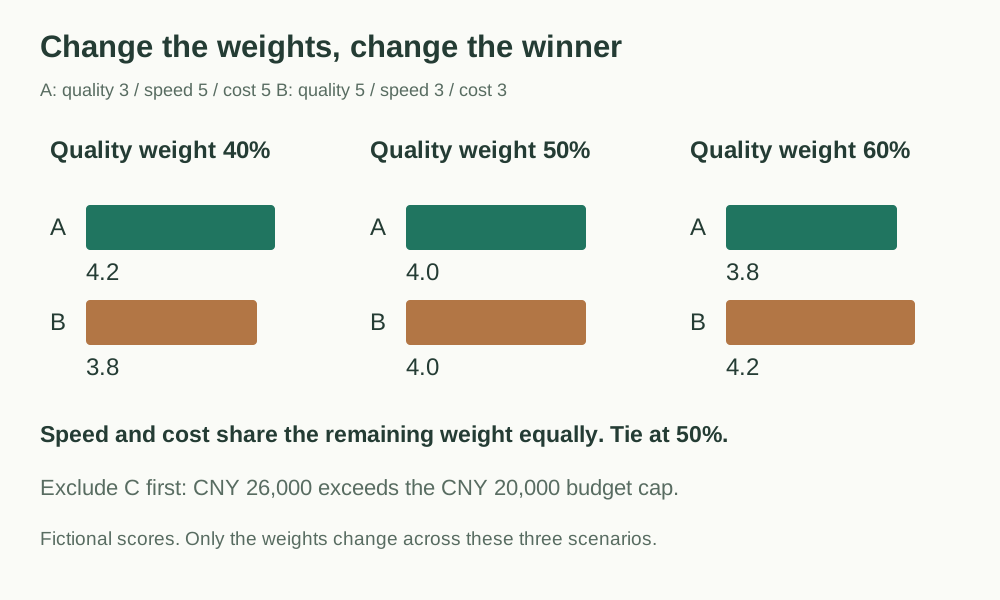
Each option has strengths. How do you choose?
Clarify constraints and weights, then check what could change the ranking.
Read the guide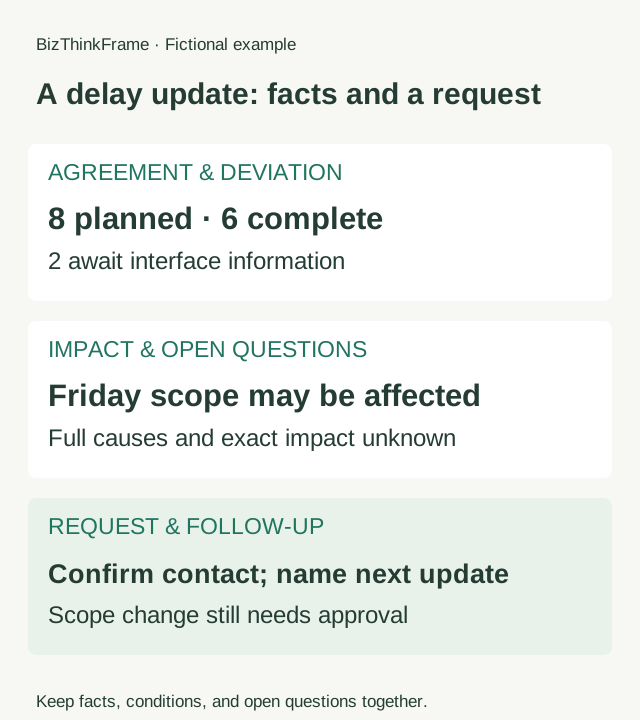
The project is delayed. How do you report it?
Separate facts, impact, and requests. Explain the situation and the support you need.
Read the guide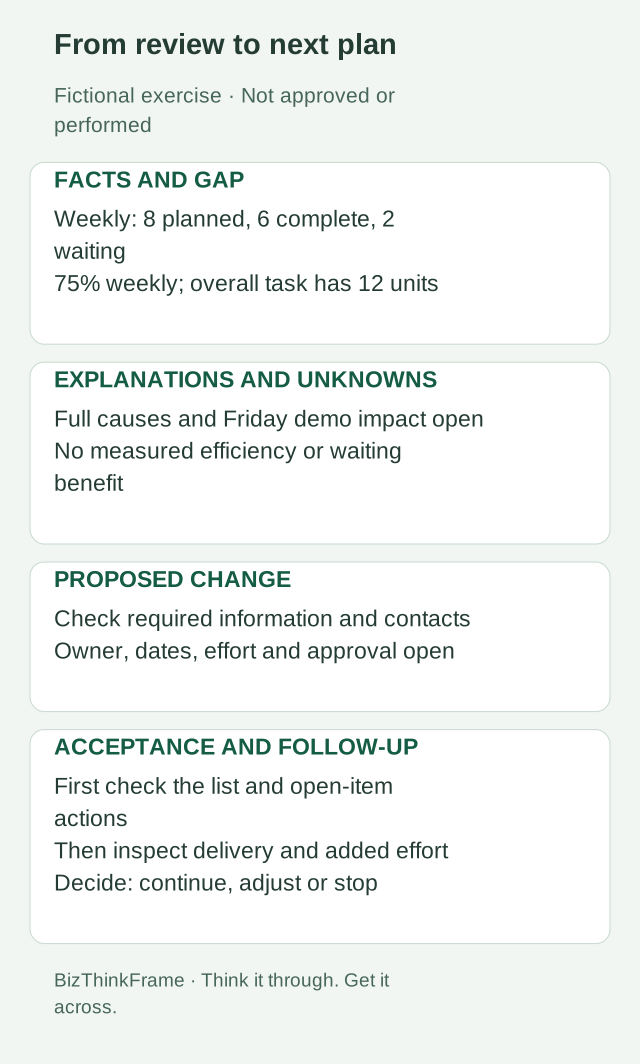
The review is done. What happens next?
Turn review findings into a plan with specific actions and checks.
Read the guideA few useful answers
Bring a work problem. Start from there.
Where should I start?
Start with frameworks to analyze a problem or compare options. Choose reporting skills to prepare a spoken or written update. To see a method in use, pick a practical guide about a situation like yours.
Do I need a background in business analysis?
You can start with a familiar work situation. Framework guides explain when to use a method, its steps, and an example. Reporting topics also start with a specific question. First check what a method helps with, then learn how to use it.
Do I need to study everything in order?
No. Scenarios and stages help you find what fits your current task. You can start at the stage you need. Frameworks within a stage offer different approaches; you do not have to use them all.
How do I know whether a method fits my problem?
Check the question it addresses, the information it needs, and its limits, then review the example. You can compare frameworks side by side. Apply your own facts, goals, and constraints when making a judgment.